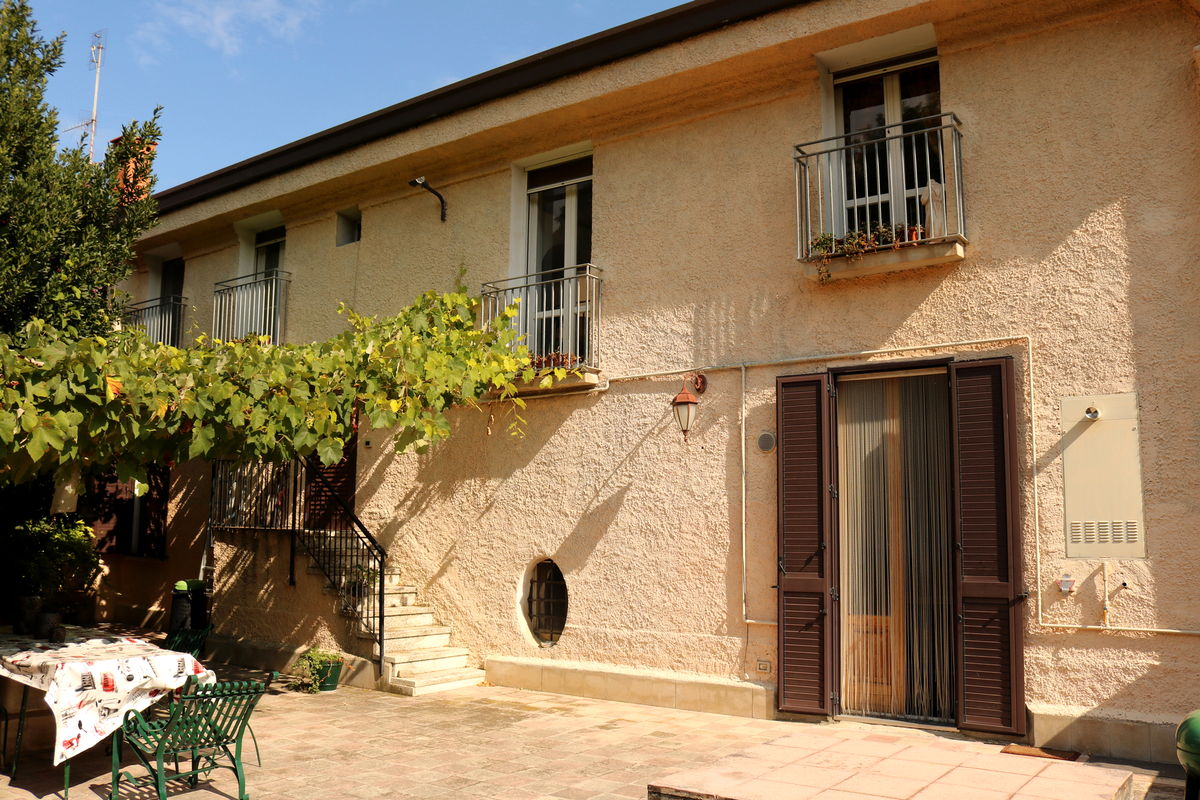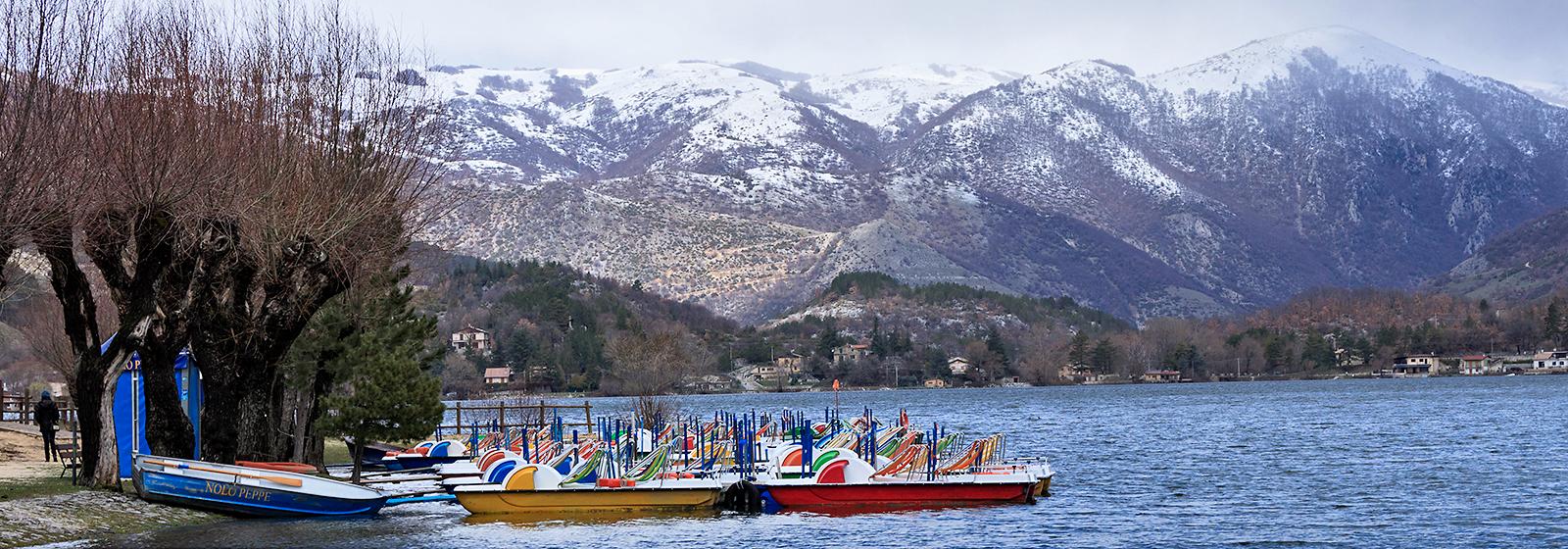




The village of Palmoli sits perched on an isolated hill towering over the western side of the river Treste at an altitude of 727 meters. The habitable settlement was built on the southern slopes of the rock, there is a steep uninhabited cliff reaching down to the west side to the river. Palmoli is prominent and proud in its historical defence overlooking many other small villages similarly perched on outcrops in the valley. Surrounded by beautiful views of the Maiella & Gran Sasso mountains and a good stretch of the Trabocchi Coast at just 29 km. There is easy access to the Trignina valley and main road that runs towards the sea, at less than 30 minutes' drive and the medieval city of Vasto or towards Molise and further through to Rome and Napoli. Located within the Chieti province of southern Abruzzo and part of the Vastese hills Palmoli has a very small population of around 1000 inhabitants.
The historical centre is nestled on a long ridge with two main through roads and numerous medieval vico’s (side streets) running perpendicularly to the main streets. The Marquise castle and tower is to be found in the main square at the highest point of the village, with a pine tree framed park and children’s playground, a shaded & peaceful place to relax whilst taking in the stunning panoramic views of the mountains, sea and nearby villages. The top of the tower provides an amazing panoramic view of surrounding landscape.
Contents
History
The village, originally called Palmula Monteverde, has very ancient roots. Around the year AD 1000, citizens, to defend themselves from barbaric raids, took refuge on the mountain, where in 1095 Pandolfo di Sangro built the oldest part of the castle, around which the urban centre then developed. In the 13th century the village then called ‘Palmula’ was governed by Filippo Grandinato, a member of a feudal family from Lombard. In the 15th century it belonged to Paolo di Sangro and at the end of the 18th century to Severino-Longo, Marquises of San Giuliano and Galiati. The ancient ruins are traceable in the medieval castle with the Marquisal chapel of San Carlo and in the characteristics of the village, full of courtyards, porches, stone portals, lunettes and railings in wrought iron and cast iron.
The chapel has a remarkable façade with a stone portal dating from the 18th century. Within the medieval walls remain two gates: Porta da Capo, called the Ribellino and Porta da Piedi, connected by a single lane. The bell tower of the church of Santa Maria delle Grazie dates back to the fourteenth century. It was rebuilt around the middle of the eighteenth century on the site of an older church that held the body of St Valentino. The church displays a carved and gilded eighteenth-century organ in which a snake and a fish are figuratively sculpted. Leaving the village, you will find the Sanctuary Mariano of Maria SS.ma del Carmine, part of the convent built by the Friars of San Francesco in 1583. With a classical design of this type of structure, a church and internal cloisters built to host the friars.


Local festivals and traditions
The local festivals here are steeped in tradition, fully enjoyed and proudly hosted by the whole of the local community. Palmoli’s Patron Saint is St Valentino and so February 14th is of particularly note, the day usually includes a procession with a nearby local band playing.